Surface water flood alerting: project update

In May we started a project to develop a pilot surface water alerting tool to use during the Commonwealth Games and to help inform our future plans for surface water flood forecasting in the SFFS. The first review stage of the project is now complete so it seemed a good time to provide an update on our progress.

Site visit
In August members of the project team went on a site visit to look at the known flood risk hot spots in the East End of Glasgow and the vulnerable transport links for the Commonwealth Games. Thanks go to David Russell from Glasgow City Council for leading the day and sharing his detailed knowledge of the area with us.
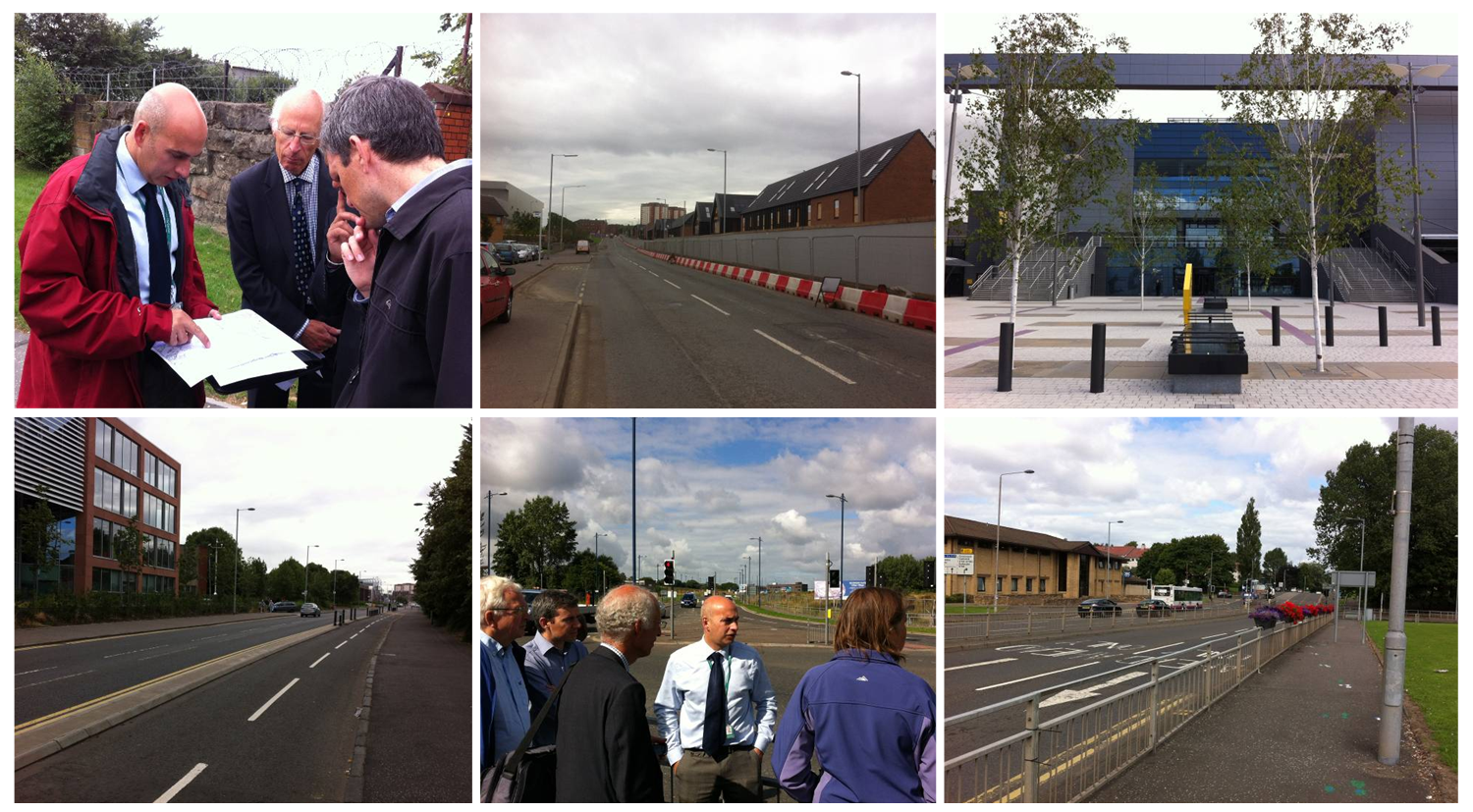
Members of the project science team visiting vulnerable surface water flooding locations in Glasgow

Members of the project science team visiting vulnerable surface water flooding locations in Glasgow

Steering group
A steering group has been set up of representatives from key responders (see previous blog post for details). This group has met twice and has provided valuable insight into the end user requirements including discussion around the most useful lead time; the time that any surface water alerting product needs to be received by to be useful; and the format and amount of information that the end product should include.  The steering group also provides an excellent opportunity to share new science with end users.

Review reports
The project science team have produced three review reports. A Met Office report; “Review of the current status of forecasting intense rainfall likely to cause surface water flooding in Scotland”, and a joint JHI and CEH report; “Review of surface water flood modelling and forecasting for urban communities”. The key findings and recommendations from these in-depth reports are outlined in a summary report available here.

Outline plan
Based on the outputs from the project reports and the steering group we hope to combine the state of the art probabilistic forecasting from the Met Office MOGREPS-UK ensemble with the proven real time surface water runoff modelling capabilities of the Grid-to-Grid model. This will then be linked to existing flood hazard maps and impact assessments to inform a daily surface water risk assessment for Glasgow. A summary of the methodology is shown below. Combining all of these elements in a real time forecasting system is new. No one else is currently doing this therefore we have an exciting but challenging few months ahead to prepare the pilot model for use during the 2014 Commonwealth Games in Glasgow.
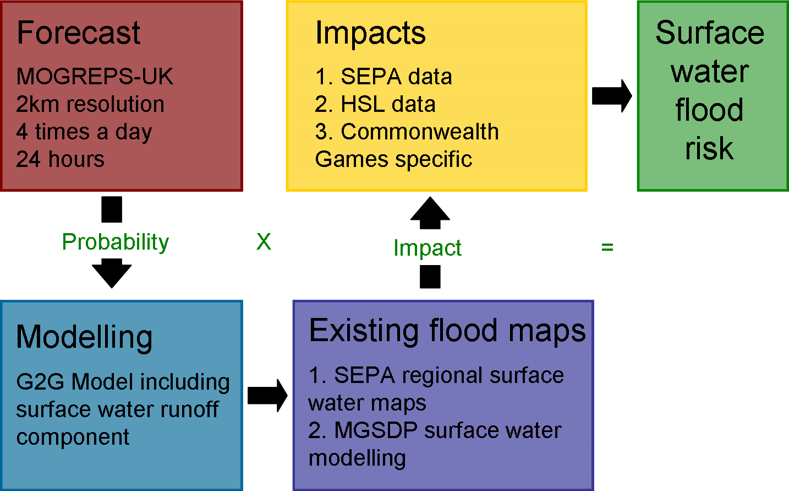
Outline methodology for the project

Outline methodology for the project
Posted in Flood, Forecasting, G2G, Research, Surface Water, Weather prediction | 4 Comments

Coastal flood forecasting in Scotland: what’s new?

Flooding on the promenade in Oban during the 1960's.  A new coastal flood forecasting system has been developed to forecast surge and wave conditions that may lead to flooding. Images courtesy of Richard Brown (Head of Hydrology, SEPA)

Flooding on the promenade in Oban during the 1960’s. A new coastal flood forecasting system has been developed to forecast surge and wave conditions that may lead to flooding. Images courtesy of Richard Brown (Head of Hydrology, SEPA)

Coastal flood forecasting has not featured much as a discussion topic on this site, which doesn’t truly reflect the growing work in this area.  Coastal flooding in Scotland represents 17% of the total flood risk in the country and flood warning is and will be a significant part in coastal adaptation strategies. Only last December Scotland witnessed probably the biggest storm affecting its eastern coastal communities since the Great 1953 East Coast flood and one which caused significant damage due to wave overtopping.

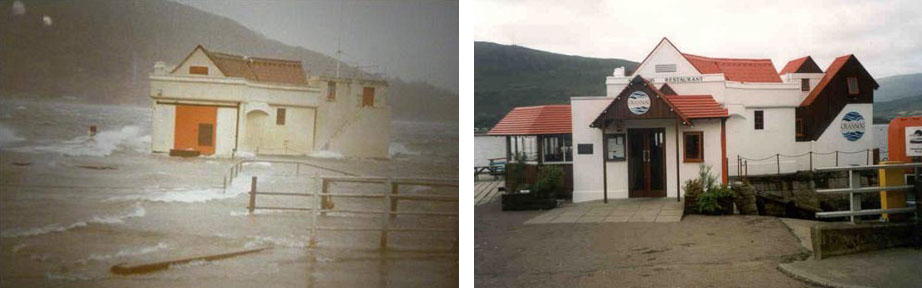
The Crannog Pier and Restaurant in Fort William. The new forecasting system will predict surge propogation up Loch Linnhe to the communities of Corpach and Caol.

The Crannog Pier and Restaurant in Fort William. The new forecasting system will predict surge propogation up Loch Linnhe to the communities of Corpach and Caol.

This October we launched a new coastal forecasting system for the Firth of Lorn and Loch Linnhe.  The west coast of Scotland is vulnerable to Atlantic weather systems that can produce significant surge conditions resulting in flooding of settlements such as Oban and Fort William (as experienced in 2005). Using the National Oceanography Centre CS3 surge model and the Met Office UKV winds, the new Loch Linnhe forecasting system produces local surge and wind-generated wave impact predictions to inform risk-based communication to responders.

In addition to the Firth of Forth and Tay coastal forecasting system, there are now plans to develop further coastal modelling capabilities for the Moray Firth in 2014.

Reference

Development of a coastal flood warning system for Loch Linnhe, Scotland (2013) Daniel Roger, Mark Lawless and Claire Harley. Coasts, Marine Structures and Breakwaters 2013: From Sea to Shore – Meeting the Challenges of the Sea.

Posted in Coastal, Forecasting | Leave a comment

Tracking medium range flow forecasts from day to day

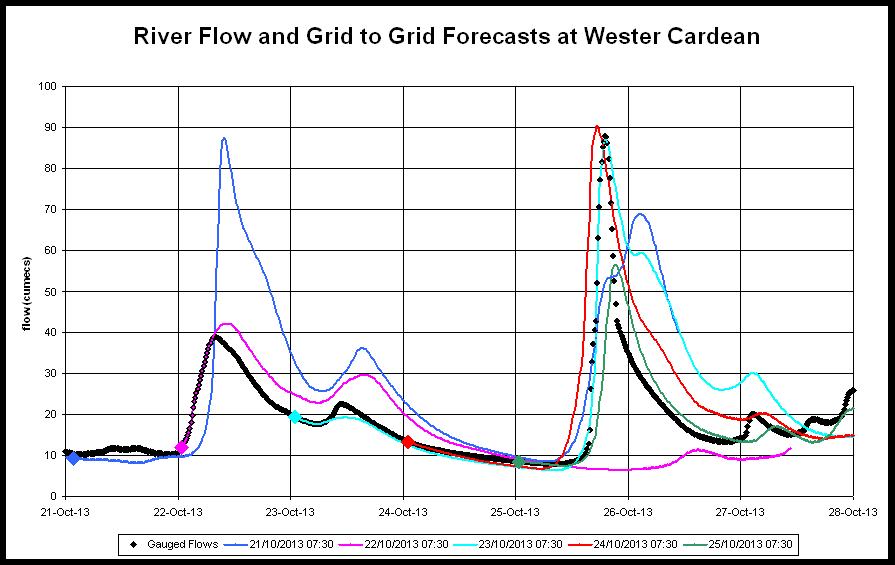
One of the challenges we face in the forecasting service when looking at flow outputs modelled from high resolution rainfall forecasts is knowing when to act – Just because we see a realistic looking peak on a forecast at day 5 doesn’t mean we should immediately believe that the event will happen. Equally, we should not just ignore such forecasts. A recent sequence of forecasts from the Grid-to-Grid model serves to illustrate our approach.

During the week leading up to Friday 25th October a succession of forecasts indicated that some flood related activity could be a possibility on the Friday. On the Monday there was a strong signal for high flows in most parts of southern Scotland for Friday. At this stage we relied on the forecasting service meteorologist’s view as to the likelihood of this event, and kept it in mind. As the week went on, the forecasts pointed more to a potential event in the Angus hills to the east of Scotland, and with forecaster professional judgement and Met Office guidance giving confidence in that outcome, the Flood Guidance Statement became more focussed on that area.

Wester Cardean

Grid-to-Grid forecasts and gauged flows at
Wester Cardean gauging station

Figure 1 shows the flows for a site in the risk area, forecast on subsequent days in the run up to October 25th. The actual gauged flows are also plotted.

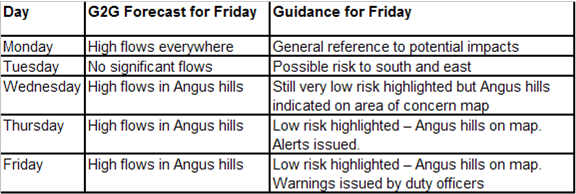
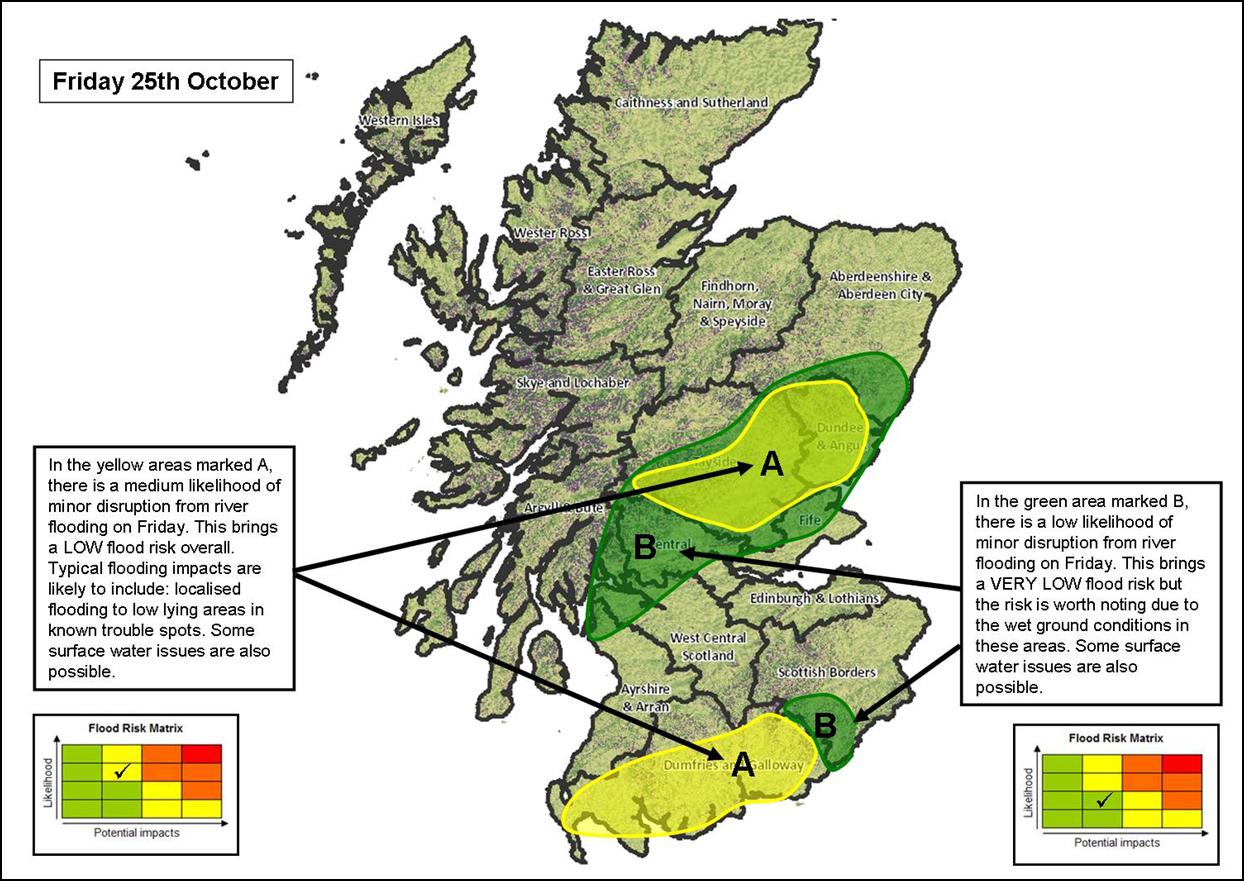
The table below summarises the forecasts and the associated guidance issued for that particular area. Other neighbouring sites gave a similar picture. The guidance for the Thursday is summarised in the Area of Concern map in Figure 2.


table

Forecasts from Mon 21 to Fri 25 October,
with associated forecaster guidance for Fri 25.

aoc

Figure 2 – Area of Concern map. Area in question is the more northerly yellow one.

As can be seen in Figure 1 above, the actual flows at Wester Cardean on the Friday were very similar to those forecast throughout the week (with the exception of Tuesday, which was recognised as anomalous by the forecaster). A Flood Alert for that area was issued on Thursday, followed by the more targeted  Flood Warning for the River Isla which was issued on Friday. This wasn’t a large event – impacts were restricted to flooding of agricultural land – but the consistent forecasts in the run up ensured that all operational staff and responders were fully prepared for what might happen.

This example implies that in future we should be able to use the evolving technology to identify significant impact events, at longer ranges, with more confidence.

Posted in Flood, Forecasting, G2G, Hydrology, Uncategorized | Leave a comment

Forecasting with higher resolution rainfall forecasts; this winter’s first test

The flood forecasting service has been using Met Office ‘BestData’ rainfall forecasts in its hydrological forecasts since summer 2013. For deterministic forecasts this is a fairly straightforward amalgamation of gridded 1.5km UKV to 36 hours, and 4km Euro4 data out to 120 hours. Only minor configuration changes were required to the Flood Early Warning System (FEWS) Scotland platform on which forecasts are viewed.

The situation with rainfall ensemble data has been more complex. Formerly we received the MOGREPS-R data feed as an 18km and 24 member ensemble. The ensemble members then fed into a suite of Grid-to-Grid (G2G) runs. Following the switch off of MOGREPS-R in summer 2013, and before the full commissioning of the new Met Office Blended Ensemble in 2014, we have adopted an intermediate solution to the problem of an easily configurable appropriate ensemble.

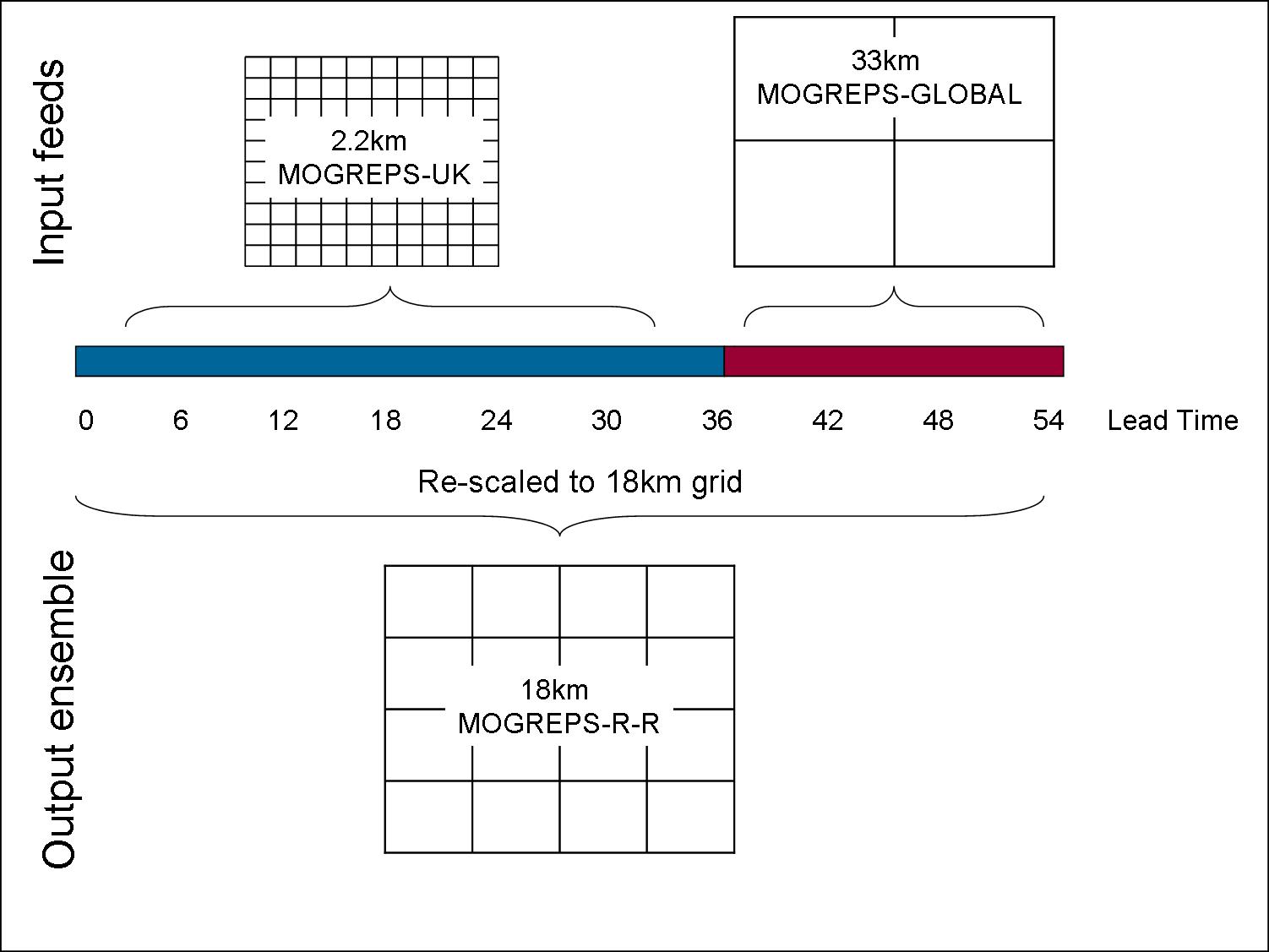
mrr

Figure 1 – composition of MOGREPS-R-R feed

This is called the MOGREPS-R Replacement data feed. It presents the same resolution to G2G as the previous feed, however the data for the first 36 hours are constructed from upscaled 2.2km MOGREPS-UK data, and the next 18 hours from interpolated 33km MOGREPS-Global. The forecasting service in Scotland are now the first customers outside the Met Office to be using MOGREPS-UK data in this applied way for operational forecasting. Figure 1 shows the make up of MOGREPS-R-R.

During the summer convective events the new ensemble product appeared more responsive than before, which is to be expected from a product derived from a high resolution forecast. However, for a hydrological model like G2G it is in the field of frontal events giving widespread rainfall that data of this type should show its value. Rainfall events providing river response in recent weeks provided the first opportunity to assess the performance of the new data feeds.

Ensemble flow forecast from G2G for a typical gauged location. Solid blue is gauged flow, red is deterministic forecast, shaded is ensemble envelope

Figure 2 – Ensemble flow forecast from G2G for a typical gauged location. Solid blue is gauged flow, red is deterministic forecast, shaded is ensemble envelope

The signs are very encouraging. On well calibrated locations the deterministic data appear to be providing more or less the correct flow response and most importantly, the new ensemble is providing a better match to the deterministic data than the old MOGREPS-R data used to. As the ensemble has been derived from higher resolution series we had hoped for this and it is therefore good to see it in action.

This should greatly assist with the forecasting decision making process during the early stages of potential flood over the coming months.

Posted in Forecasting, G2G, Probabilistic, Risk communication, Uncategorized | 1 Comment

International Conference on Flood Resilience and an award for the SFFS

The International Conference on Flood Resilience (ICFR) held in Exeter on 5-9th Sep bought together the complementary areas of building resilient town and communities, and improving preparedness through reliable flood models and forecasts.

The opening keynote by Dr Hong-Yuan Lee, the Taiwan Minister for the interior, highlighted the scale of the challenge in the face of climate and social changes. Although compared to Asia flooding in Europe might appear insignificant, his over riding message of the need for understanding and clear communication at all levels of society from government through to individual villages is applicable to all.

Closer to home Yong Wang illustrated the recent national scale flood mapping project for Scotland and Steve Cole presented an update on the CEH work on “Real-time hazard impact modelling of surface water flooding.” This presentation has close links to our ongoing work in Scotland and highlighted the challenge of taking the next step of linking forecasts to impacts.

Looking to the future many presentations, including SueTapsell’s work as part of the WeSenseIt project, looked at how social media could be utilised to improve flood resilience, and encouraged us to not use a lack of data as an excuse to not try to do anything as is most cases much can be done with the little information we have and built on in the future (for example Ole Mark and Jeanne-Rose Rene).

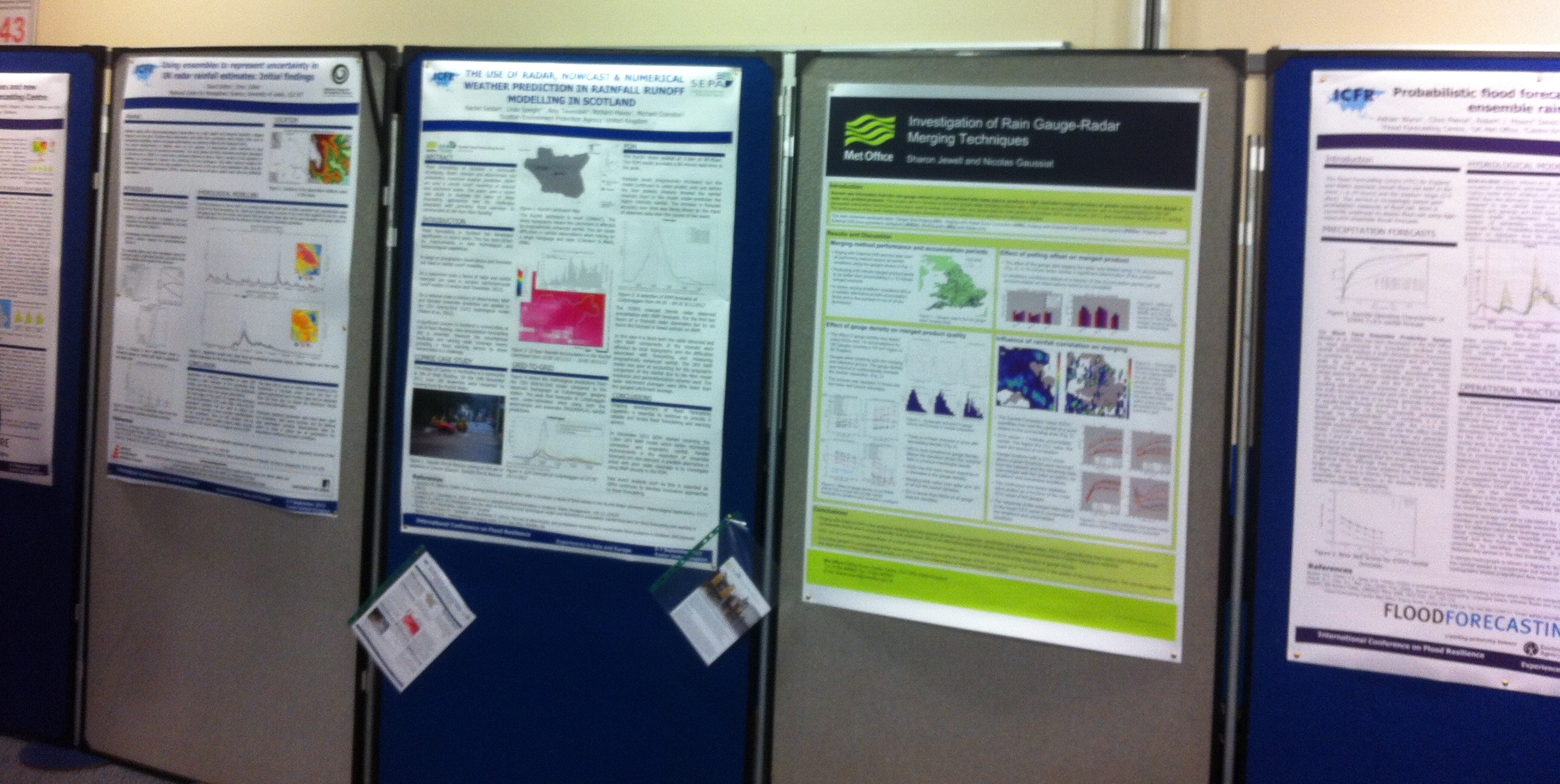
The week was topped off with the news that the SFFS poster on “The use of radar, nowcast and numerical weather prediction in rainfall runoff modelling in Scotland” had won best poster in the flood forecasting and modelling sessions. Click here to view the poster.

The SFFS poster and other contributions at ICFR

The SFFS poster and other contributions at ICFR


Posted in Conference | Leave a comment

High Impact Weather: the role of the forecaster and verification

Day 2 and our final contribution to this science session. The role of the forecaster dominated the morning session on applications of meteorology in warning of severe weather and other natural hazards.

Linda Speight presenting on the role of the forecaster in Scotland.

Linda Speight presenting on the role of the forecaster in Scotland.

Automation of warnings was presented (Reichert) allowing for greater situational awareness for the forecaster, followed by giving forecasters improved understanding of vulnerability and exposure on a global scale (Titley). The ever increasing role of new capabilities now places a growing role in decision making not forgetting the intangibles such as the need for experience and to consider non-scientific matters when alerting (Speight).

For the afternoon sessions the focus shifted to verification. It’s clear that there are many issues to consider here, and the method chosen will have to depend on the particular model and circumstances in question (Ebert). The importance of public confidence, and communication of uncertainty was stressed by several contributors, and the question as to whether we should be focussing on the more visible forecasts of extremes, or more properly looking at the whole range (Lerch). Operational forecasters are taking uncertainty into account anyway when making decisions (v der Plas) but there is still a need for objective measures of accuracy. It was also stressed by many contributors (Mittenmeier) that higher resolution forecasts present greater challenges for verification, with greater danger of falling foul of the verification “double penalty”. The way forward therefore must include neighbourhood sampling methods.

Posted in Conference, Risk communication, Weather prediction | Leave a comment

High Impact Weather: Working in Partnership

Day 1 at the European Meteorological Society annual conference and one of the key messages from John Hirst’s opening keynote speech was for the need for clear, joined up, communication of the risk of severe weather impacts. This Reading-based EMS event may have meteorology at its core, but partnerships and a joined up approach across disciplines in the understanding and application of the early warning of high impact weather already emerging as a key to the theme of the conference.

Rob Neal presenting ensemble-based first guess warnings in support of the risk-based UK National Severe Weather Warning Service.

Rob Neal presenting ensemble-based first guess warnings in support of the risk-based UK National Severe Weather Warning Service.

Topics of the opening day’s parallel sessions ranged from the understanding of skill in hydrological predictions (Pappenberger) to translating warnings into mitigating actions (Ralston and Perrels). It’s where these two themes meet that provides our greatest interest for decision making and risk communication.  This was evident in the final session (NWP and nowcasts to forecasts and warnings) which highlighted some tangible opportunities in flood and weather science research (Ballard and Moore). However what is clear is that the uncertainties involved in any predictions of extreme events provide one of the biggest challenges in Hirst’s call for clear communication.

Posted in Conference, Research, Risk communication, Uncategorized, Weather prediction | Leave a comment

Hydrometeorological science: forecasting in rapid response catchments

The problem of flash flooding from highland rivers is one with which the village of Comrie is all too familiar.  More than 100 homes were evacuated in storms in August 2012 and once again that year in November.  Some flood risk management measures are now in place for the Perthshire community including the provision of flood warning, but given the hydrological response of the river these alerts could give just 30 minutes warning.

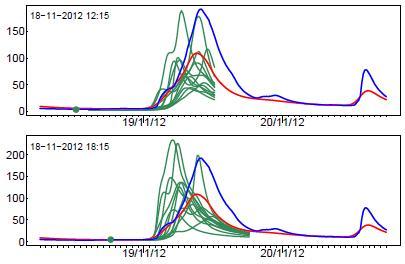
Flood warning strategies now provide specific outcomes for improving the science including the development of methods for forecasting in rapid response catchments in Scotland.  This is supported by science developments at CEH Wallingford and the Met Office for applying short term rainfall ensembles to new approaches in gridded hydrological modelling.  When applied to the November storm the predictions suggest a strong signal for the extreme runoff at the 18 to 21 hours lead time (see image).  However, the predictions decrease in skill much closer to the peak due to how the STEPS nowcast handles rainfall generated by orography – a significant issue in upland Scotland. 

Predicting ahead: a strong signal for extreme flows ahead of the 19th November 2012 flood peak on the Ruchill Water in Comrie. Observed flow hydrograph (blue), G2G simulation using raingauge input (red) and G2G ensemble simulations using STEPS rainfall predictions (green). Image © CEH Wallingford.

Predicting ahead: a strong signal for extreme flows ahead of the 19th November 2012 flood peak on the Ruchill Water in Comrie. Observed flow hydrograph (blue), G2G simulation using raingauge input (red) and G2G ensemble simulations using STEPS rainfall predictions (green). Image © CEH Wallingford.

This current research is highlighting some potential advances to alert times for communities such as Comrie but these do come with significant uncertainty and would require greater capability for interpretation of hydrometeorological forecasts.

Footnote: This recent commission is part of a wider Environment Agency led project on ‘Evaluating and improving the Grid-to-Grid (G2G) Model for flood forecasting in rapid response catchments’.

Reference

The policy and science supporting flash flood forecasting in Scotland (2013) Michael Cranston, Richard Maxey, Linda Speight, Amy Tavendale, Steven Cole, Alice Robson and Robert Moore.  Geophysical Research Abstracts, Vol. 15, EGU2013-12468, 2013, EGU General Assembly 2013.

Posted in Forecasting, G2G, Probabilistic, Research | Leave a comment

Recent flood impacts and forecasts: how well did we do?

Daily assessment of flood risk from the FGS

Daily assessment of flood risk from the FGS

You don’t have to look very far over the past few weeks to find people complaining about being caught out by heavy rainfall and flash flooding that wasn’t forecast, however the forecast from the Scottish Flood Forecasting Service and the Met Office has been for isolated heavy showers with the potential to cause significant disruption.

Statements such as the following have been included in our Flood Guidance Statement (FGS) for responders, and, where the confidence in the forecast increases, we have issued Flood Alerts to the public to be aware of potential surface water flooding:

  • “There is a MEDIUM likelihood of MINOR disruption due to surface water flooding across most parts of the country due to thundery downpours. There is also a LOW likelihood of SIGNIFICANT disruption if the most intense showers fall in vulnerable areas.”
  • “There is an ongoing risk of thundery downpours, however, the likelihood of flooding in any one location is only low, so the flood risk is VERY LOW.”
The hatched area on the risk matrix shows the type of flood risk forecast over the past week

The hatched area on the risk matrix shows the type of flood risk forecast over the past week

In reality this means that some places might stay dry and sunny all day, while just down the road a flash flood occurs. Although it may sound like we’re hedging our bets, as discussed in the previous posts on flash flooding (1,2,3), it really is very difficult to pinpoint the exact location of the heaviest rainfall in advance so for surface water events this is a reasonable forecast and impacts should be expected anywhere across large areas of the country.

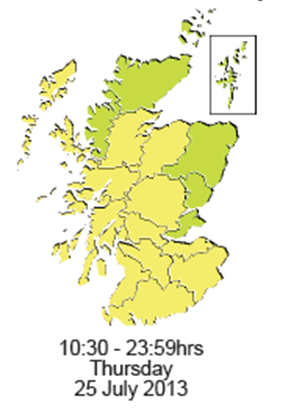
Take for example the flooding in around Glasgow on 25th July. Our FGS identified a medium likelihood of minor disruption and a low likelihood of significant disruption. A flood alert was in place for West Central Scotland. Around 5pm Greenock experienced in excess of 20mm of rainfall in an hour. Impacts included flooding of roads and isolated properties including a shopping centre. The fire service received 23 flood related call outs (The Scotsman). Based on our impact matrix definition this event caused minor disruption with local agencies (the council and fire service) able to deal with the impacts. So I would conclude that we had correctly forecast this event and the public and responders were alerted in advance to the potential for surface water flooding.

Flooding impacts in Glasgow and Greenock on 25th July 2013 Clockwise from top left a) London Road (BBC News), b) Bookies in Greenock (STV News), c) East Hamilton Street (STV News) , d) Broughton Road (BBC News)

Flooding impacts in Glasgow and Greenock on 25th July 2013
Clockwise from top left a) London Road (BBC News), b) Bookmakers in Greenock (STV News), c) East Hamilton Street (STV News), d) Broughton Road (BBC News)

A similar story occurred on 28th July. Again the FGS and Flood Alerts were highlighting the risk of heavy isolated showers and residents in Camelon near Falkirk experienced flooding in their gardens (BBC News). Throughout the week there was local disruption to transport across Scotland with surface water slowing traffic and roads closed at known flooding hot spots. Luckily the heaviest showers forecast have not come to fruition, but the spell of showery weather isn’t over yet so we could see more impacts before the end of the summer. Don’t forget that many of the biggest impacts from flooding occur during the summer months. For example Glasgow experienced floods in July 2002, June 2007, August 2011 and July 2012, so it shouldn’t come as too much of a shock when we see flash flooding in the summer.

Posted in Flood, Forecasting, Surface Water | Leave a comment

Surface water flood alerting for the Commonwealth Games

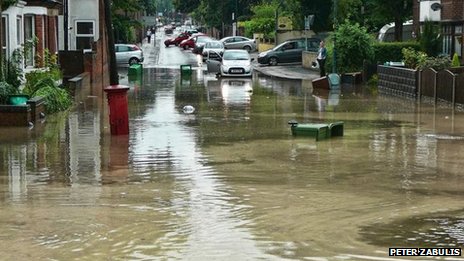
Photo shows the impact of recent surface water flooding in Nottingham in July 2013 (BBC News)

Recent surface water flooding in Nottingham in July 2013 ( Source: BBC News )

Following the previous posts on flash flood forecasting, the next step is to investigate how recent advances in the science of forecasting heavy rain shower events could be translated into a surface water alerting tool for responders.

Surface water (or pluvial) flooding occurs when rainfall is not able to enter a watercourse or artificial drainage system and ponds or flows across the surface. In Scotland 38% of flooding impacts are from surface water (National Flood Risk Assessment, 2011). If your house isn’t at risk, there’s a reasonable chance that the road or railway line you use to get home is. Although our river and coastal warning systems are well established, surface water alerting is in its infancy.

There are two key challenges, firstly knowing where and how much water is likely to fall, and secondly knowing what will happen when it hits the ground. To help address these challenges we have set up a research project to develop our surface water alerting capabilities. We plan to put together a pilot tool to enable us to provide surface water alerting for the Commonwealth Games in Glasgow in 2014. Following the Games we will use our experience from this pilot to inform our future plans on wider surface water alerting tools for Scotland. The research work is being funded through the Centre of Expertise for Waters (CREW) and carried out by a consortium of experts from the Met Office, CEH Wallingford and the James Hutton Institute. Details of the project aims and objectives are available on the CREW website.

As well as the science work, a stakeholder steering group has been set up including staff from the Scottish Government, SEPA, Transport Scotland, Scottish Water, the Met Office, Glasgow City Council and the Commonwealth Games organisers. The first step was to ask responders what they wanted from a surface water alerting tool. The group identified that the critical period is the 12-24 hours lead time window. During this period responders can make proactive preparations such as clearing gullies, and make sure their standby teams are ready. With 6 hours to go before an event, responders wanted to know which areas of the city are likely to be affected so they can position resources in the right place, as once flooding starts it becomes increasingly difficult to move around the city. Our challenge is to develop the science to help meet these requirements.

This research project will be running for the next 12 months so check back for further updates on our progress.

Clyde - The Glasgow 2014 Games Mascot

Clyde – The Glasgow 2014 Games Mascot ( Source: STV News )

Posted in Flood, Forecasting, Research, Surface Water | 6 Comments