Hydrometeorological forecasting and ex-tropical storm Bertha

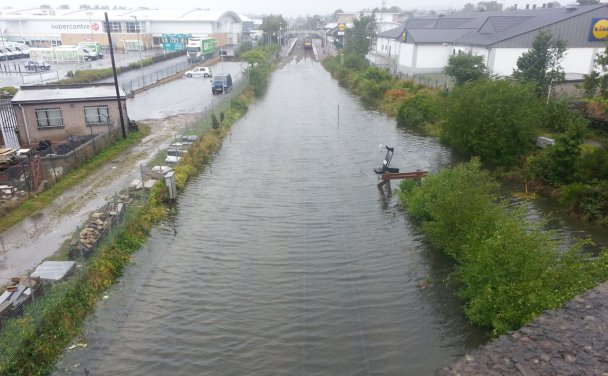
Train services between Inverness and Aberdeen were disrupted given flooding to the track through various stretches in Moray (source: Moray Radio online).

Train services between Inverness and Aberdeen were disrupted given flooding to the track through various stretches in Moray (source: Moray Radio online).

On Monday 11th August, the remnants of the ex-tropical storm Bertha brought heavy and very intense rain for many parts of northern Scotland. Early indications are that over 100 mm of rain was recorded over a 12 to 16 hour period (source: Met Office) with some gauges recording between 120 and 140 mm (source: SEPA). The resultant flooding across many parts of Moray and Speyside caused significant transport disruption across the region.

In Elgin over 200 homes were evacuated as a precautionary measure in many cases with the partially completed flood alleviation scheme saving hundreds of homes and businesses from flooding, with one business owner commenting ‘we are particularly happy to see that homes at risk in our community managed to escape what could have been a devastating event.’
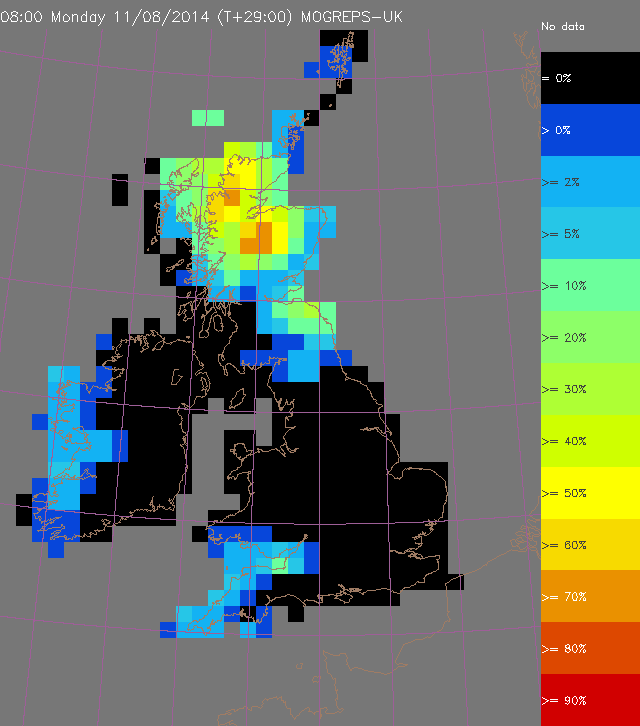
The flood forecasting service Heavy Rainfall Alert tool.  The map indicates the potential for 40mm in 6 hours with a strong signal (greater than 70%) across areas of Speyside and Wester Ross. The model uses MOGREPS-UK and has a lead time of 29 hours for this 6 hour accumulation at 08:00 on Monday 11th.

The flood forecasting service Heavy Rainfall Alert tool. The map indicates the potential for 40mm in 6 hours with a strong signal (greater than 70%) across areas of Speyside and Wester Ross. The output uses MOGREPS-UK and has a lead time of 29 hours for this 6 hour accumulation at 08:00 on Monday 11th.

It was clear from several days ahead that this tropical storm was to make a transition across the Atlantic and head towards Northern Europe, bringing with it the high likelihood of heavy rain and strong winds. Yet, how challenging was it to predict the likely flooding impacts of this weather system over Scotland? The Met Office were providing daily assessments on the likely track of the storm and how this could generate into low pressure systems as it head towards the UK.  The potential for severe weather affecting the north of Scotland became much clearer during Saturday 9th and Sunday 10th with numerical weather prediction models highlighting an area of significant rainfall accumulation.

Potential flooding impacts were highlighted using the Grid-to-Grid (G2G) an operational model run by the flood forecasting service.

G2G uses high resolution deterministic rainfall forecasts and forecast ensembles using MOGREPS-UK and MOGREPS-Global.  The forecasts from this system were particularly useful in highlighting the rivers and catchments that were most vulnerable to the flood threat which aided early communication and warnings to responders.

Output from Grid-to-Grid operated by the flood forecasting service.  Forecasts for countrywide 1km gridded hydrological response compared with Qt grid to highlight the potential severity of flooding (left) and hydrological ensemble-based forecasts for the River Lossie at Sheriffmills in Moray (right).

Output from Grid-to-Grid operated by the flood forecasting service. Forecasts for countrywide 1km gridded hydrological response compared with Qt grid to highlight the potential severity of flooding (left) and hydrological ensemble-based forecasts for the River Lossie at Sheriffmills in Moray (right).

Flooding of this nature is not unusual for August i.e. 1829 Muckle Spate and 1970 Findhorn flood, however as forecasting science capabilities improve so does our awareness of the potential for significant flooding impacts.

The Scottish Flood Forecasting Service was established in 2011 to improve vigilance to flooding as a natural hazard and to ensure the availability of robust and timely advice through the provision of a combined meteorological and hydrological service. Through the activities in the development of new hydrometeorological approaches such as the use of MOGREPS in Grid-to-Grid this has hopefully allowed responders to get the best possible guidance and value from this new capability during the recent floods.

Posted in Flood, Forecasting, G2G, Hydrometeorology, Probabilistic, Risk communication | 3 Comments

Operational surface water flood forecasting model for Glasgow now live

After 18 months of hard work from ourselves, CEH Wallingford, Deltares, Met Office and the James Hutton Institute, our Glasgow surface water flood forecasting model is now operational (previous updates available here and here). We believe this is the UK’s first operational surface water flood risk forecast with a 24 hour lead time.

The model combines recent advances in the science of forecasting convective rainfall events in the Met Office blended ensemble and Nowcast ensemble with SEPA’s new pluvial flood risk maps. The Centre for Ecology and Hydrology Grid-to-Grid model (Moore et al., 2006, 2007; Bell et al., 2009) is used to convert the forecast rainfall from each ensemble member into surface runoff. This is used to link the rainfall event to SEPA’s existing library of impact assessments to give a fully risk based forecast. We have separated the impacts into two categories; people and property, and transport. Thresholds have been assigned to allow us to compare the forecast impacts directly with the existing flood risk matrix used by the flood forecasting service.

The surface water flood risk assessment methodology

The surface water flood risk assessment methodology

The model will run eight times a day. The output will be used to produce surface water flood risk guidance during the Commonwealth Games which will be fed directly into the Multi Agency Control Centre through SEPA’s Resilience Officers. The guidance is also available to other category 1 and 2 responders in Glasgow and will enable proactive action to help minimise the impact of potential flooding, and reduce recovery time. After the Games the model will continue to run for the rest of the summer and will help inform our future development of surface water flood forecasting across Scotland.

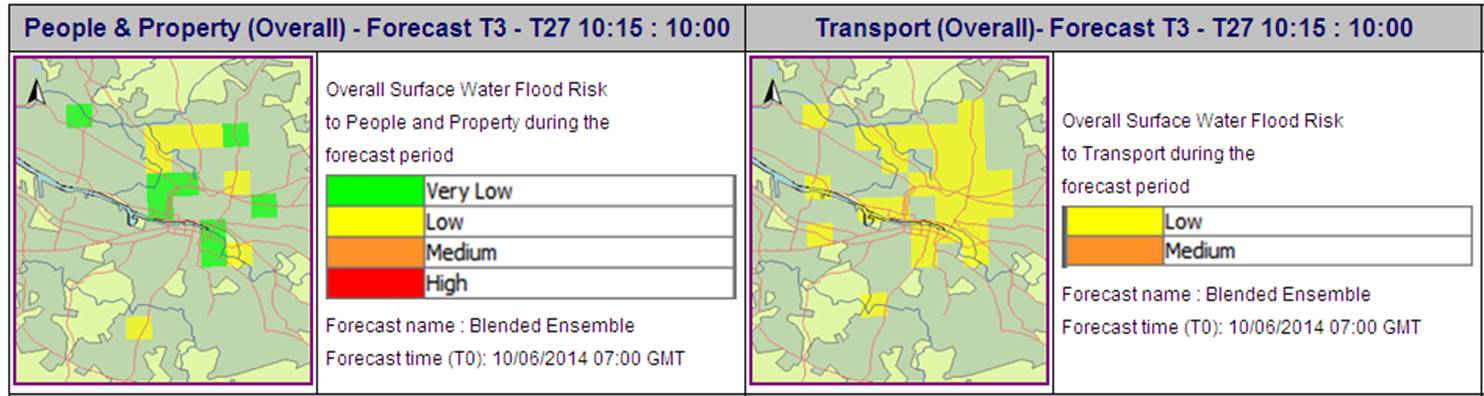
The first heavy rainfall event that we have seen in the model showed some promising results. On 10th June there were heavy showers forecast across south west Scotland with a small probability of rainfall exceeding 20mm in 3 hours across Glasgow. This borderline type of event is what we are most likely to see during The Games. The model highlighted a low overall flood risk due to the potential for significant impacts, particularly for transport, although the probability of this occurring was very low. On the afternoon of 10th June some minor transport disruption was reported in Glasgow with flooding of roads in known vulnerable locations.

Model output showing the overall surface water flood risk to People & Property and Transport on 10th June

Model output showing the overall surface water flood risk to People & Property and Transport on 10th June

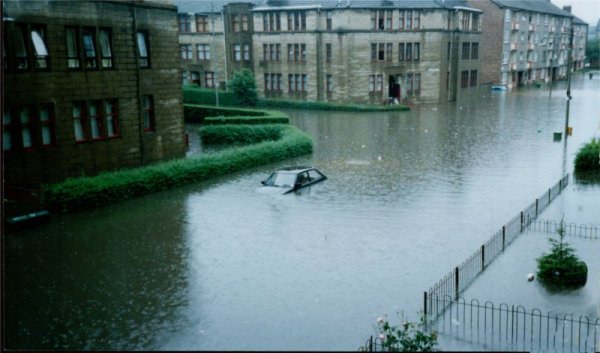
Glasgow in July 2002 (source Dennistoun online). A sight that hopefully won’t be repeated 12 years on.

Glasgow in July 2002 (source Dennistoun online ). A sight that hopefully won’t be repeated 12 years on.

While we hope for a dry fortnight for The Games, the flood forecasting service is now well prepared to provide additional surface water guidance directly into the Commonwealth Games Multi Agency Control Room using cutting edge science. We hope that our experience of using the new surface water flood forecasting tool over this summer will help us to improve our surface water forecasting for other areas of Scotland in the future.

Posted in Flood, Forecasting, G2G, Surface Water | 5 Comments

Staying alert in rain or shine

Last summer our Met Office coordinator Pete Buchanan produced a couple of articles about surface water flooding. In the second article he explained how our Heavy Rainfall Alert (HRA) Tool works. Here he gives us an update on further development of the tool and its operational use.

During its first year of operation (2013) and particularly during the summer convective season the tool helped us to identify the potential for surface water flooding. In fact, verification against known events showed a ‘hit’ on almost all occasions. We did however notice some characteristics of the tool, most notably the fact that the probabilities of exceeding the various impact based depth duration thresholds rarely if ever got above the ‘low’ category. 

My earlier article also mentioned the development of the tool to use the Met Office’s high resolution, convective permitting ensemble called MOGREPS-UK. I am pleased to say that this development has now been implemented operationally. The ‘raw’ MOGREPS-UK outputs are post processed by time lagging and neighbourhood sampling to better represent the uncertainties associated with small scale convective features. The sort of features which can lead to surface water flooding and flash floods. Early experience of the improved tool suggests that it has more focus and a wider range of probabilities.  It certainly helps point to potential issues and the areas most at risk although SFFS flood forecasters and meteorologists still need to look at all sources of information before making the best risk based decisions on a day to day basis. 

We will continue to monitor the developed tool during the summer convective season and feed back our experiences and impressions to our research and development colleagues. The following case study shows where the information was used to refine the SFFS Flood Guidance Statement (FGS).

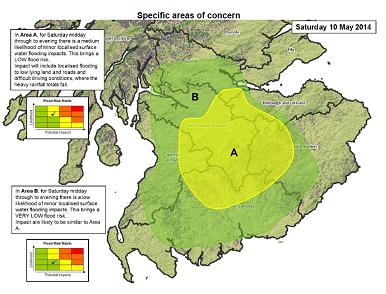
chart1On 10th May 2014 there was a slow moving and unstable area of low pressure over Scotland with an embedded frontal system and light winds.

It is interesting to note that probabilistic forecasts can operate on different scales and, depending on the scale, they will produce different outcomes.

probability of 15mm in 1 hr within each square

probability of 15mm in 1 hr within each square

probability of 15mm in 1hr

MOGREPS-UK probability of 15mm in 1hr

For instance, the probabilities shown in the MOGREPS-UK raw output are much lower than those in the HRA Tool, because they are reporting at different scales. (The probability of occurrence in a particular 2km square is necessarily always going to be smaller than that of occurrence somewhere within a 32km square, which in turn will be lower than the probability of occurrence over an alert area.)

The SFFS meteorologists and flood forecasting hydrologists need to put this information into geographical and likely impact contexts in order to develop the overall flood risk.

FGS for 10/5/14

Area of Concern map on FGS

Area of Concern map on FGS

After reference to these forecasting tools and further discussion between the SFFS meteorologist and the SFFS flood forecasting hydrologist, it was decided to issue a YELLOW risk for southern Scotland in the routine flood guidance statement. The tools also helped refine the focus of the guidance through the event driven addition of an ‘Area of Concern’ map.

What actually happened on the day? Well the afternoon radar picture confirmed the occurrence of some heavy downpours, in the area of concern,  and there was a report of a town’s drainage systems not coping with the intensity of the rainfall. 

Radar image of rainfall on 10/5/14

Radar image of rainfall on 10/5/14

Conclusion: The consistent and accurate forecasting of surface water flooding risk in Scotland remains a major challenge for the SFFS. These developments in the underpinning science and technology are contributing to improved performance. 

A further demonstration which couples the meteorology with an optimised version of SEPA’s ‘grid-to-grid’ hydrological model is being prepared for the Glasgow Commonwealth games this summer. See our previous article about this for more information.

Where do we go from here? We expect further relevant developments in the science and technology behind surface water flood alerting. For example, the Met Office has started the procurement process for its next supercomputer and already there are plans to use this tool to enhance the capability and performance of the associated deterministic and probabilistic forecasts. Watch this space!

Posted in Flood, Forecasting, Probabilistic, Risk communication, Surface Water, Uncategorized | 1 Comment

Engaging with hydrometeorology across Europe

In the SFFS we have 12 operational flood forecasting hydrologists working on a rota system as well as meteorologists on shift at the Met Office. Similar numbers of people are working in most countries across Europe and worldwide. Combine this with the number of people working ‘behind the scenes’ on research and development and it is immediately evident that hydrometeorology is a large and rapidly growing discipline.

Engaging with other scientists on an operational and development level is important to continue providing a skilled and competent forecasting service. This can be achieved though traditional methods such as keeping abreast of new research or online communities such as HEPEX, but face to face meetings remain highly valuable.

image[7]

The Met Office in Exeter where the FFC are based

Our closest neighbour (both geographically and in terms of products and data) is the Flood Forecasting Centre (FFC) for England and Wales. We aim to meet up every 6-12 months with the FFC to share ideas and ensure consistency across the UK. Last month three members of the SFFS travelled down to Exeter to meet operational hydrometeorologists at the FFC and partake in joint training on new meteorological forecasting methods.

Further afield there is an active flood forecasting community across Europe bought together by the European Flood Awareness System (EFAS). The annual EFAS meeting last week, this year held in the Netherlands, provided a valuable opportunity to meet up with other flood forecasters, learn about their experiences and discuss new developments and challenges, one of the main ones being the presentation, communication and use of probabilistic forecasts. The SFFS was identified as setting a good example in how much of its science it communicates to end users, for example through workshops and this blog!

EFAS

Looking round the EFAS dissemination centre at Rijkswaterstaat

As well as operational links the SFFS is also involved in research partnerships for example we were invited to give a presentation on the development of the pilot surface water forecasting tool for Glasgow at the RainGain Annual Observers meeting. RainGain is a project which is looking at a range of areas to help improve surface water flood forecasting and surface water management from developing radar rainfall detection to small scale coupled surface and subsurface urban flood models.

NHP

NHP Partners

Broadening out from flood risk, SEPA is a member of the Natural Hazards Partnership (NHP), a group of organisations working to improve how risks from natural hazards are modelled in the UK. The Annual NHP Science Conference in March provided a great opportunity to review the extreme weather and response to the coastal, fluvial and groundwater flooding combined with high winds, landslide and sinks holes over the past winter.  The NHP has been working on many of these areas for several years but the recent events have pulled the discussion from the theoretical to the applied, raised government awareness of the issues and highlighted how important it is to have a joined up approach to multi-hazard events.

A busy couple of months but it’s always rewarding to both share the work with have been doing in Scotland and learn from others working in similar areas. There was a common theme running through all of these discussions that communication is key, it is vital that we continue working together with scientists, other operational organisations, responders and governments to make sure the right people have the right information at the right time to make informed decisions.

Posted in Conference, Hydrometeorology, Partnerships, Research | 1 Comment

Forecasting from Sea to Shore (Part 1): Learning from the past

In a winter that witnessed a succession of storms that have affected many parts of the UK, calls are being made to understand what lessons should be learnt in order to be better prepared for future storms.  Given the longevity and subsequent severity of the impacts across some parts of southern Britain, it’s easy to forget that the first affects of the winter storms were seen as far back as early December in Scotland with some of the highest coastal water levels on record.

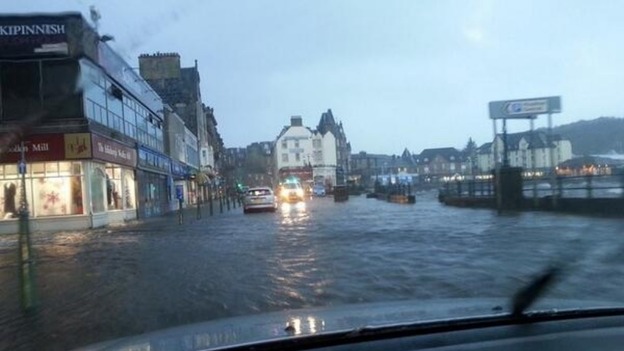
Flooding of the sea front in Oban (Source: Twitter/@mairiwatson1)

Flooding of the sea front in Oban (Source: Twitter/@mairiwatson1)

In the early hours of the 5th December a storm hit north west Scotland resulting in a significant tidal surge which travelled down the east coast of Scotland. Commercial properties in Oban were the first to be impacted by flooding, followed by issues in Inverness, the Moray coastline, Aberdeen, the Firth of Forth and in Eyemouth, which witnessed their worst flooding in decades.  The United Kingdom Coastal Monitoring and Forecasting group (UKCMF) commissioned a study to record basic statistics and facts relating to the recent coastal storms.  One of the notable peak water level statistics was recorded at Leith with a peak of 3.71 metres above ordnance datum (associated surge level of 1m) being the largest on record and correlating to the magnitude of some of the impacts along the east coast.

But were we prepared for a storm of this magnitude?

It was the tragic deaths in Uist in the severe storms of 2005 that previously brought coastal flood risk into political and public focus.  The ‘Coastal Flooding in Scotland’ scoping report recognised the benefits of flood warning in the coastal zone and emerging warning strategies started placing greater demands on a developing coastal forecasting science area.  This has subsequently led to a number of significant developments which were tested during the recent floods.

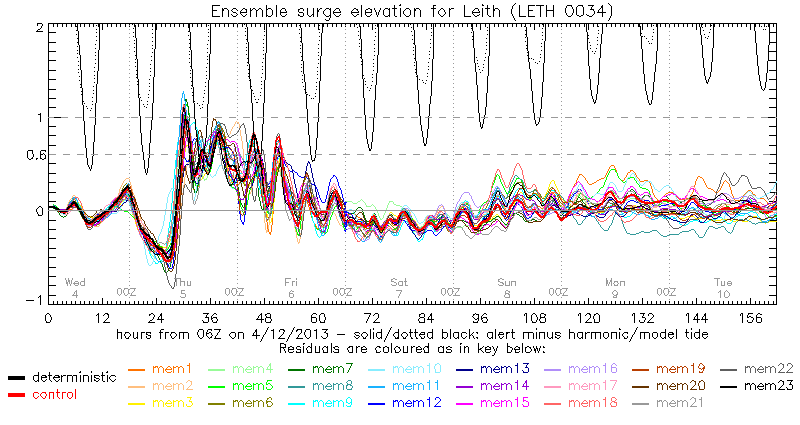
Predicted ensemble surge elevation for Leith from 4th December 2013.

Predicted ensemble surge elevation for Leith from 4th December 2013.

New coastal flood forecasting systems have been introduced including a system that underpins warnings along the east coast for urban centres such as Dundee, Kirkcaldy and Grangemouth – these typically benefit from 12 to 24 hours warning.  This system is supported by much closer integration of meteorological models forecasting onshore impacts such as the UK4 wave model.  However, as the demand for longer forecast times grow, so does the uncertainty in flood predictions.  The emergence of ensembles of surge predictions out to 7 days is allowing the flood forecaster to quantify the uncertainty in the forecast and – in the case of December – issue guidance to emergency responders 4 to 5 days in advance of the flooding.

The new forecasting capabilities in the south east did lead to a greater level of awareness of the emerging flood risk as we entered December.  SEPA’s Floodline service had an incredibly busy spell with thousands of direct messages being issued to customers of the service however the true magnitude of the hazard may not have been realised until after the event.

Reference

M. Cranston, L. Naysmith, A. Tavendale, L. McLean, P. Hart, C. Whitlow, C. Powis and K. Hu (2013) The Firths of Forth and Tay flood warning scheme and the storm of December 2012. ICE Breakwaters Conference, Edinburgh.

Posted in Coastal, Forecasting, Probabilistic, Risk communication | 4 Comments

Behind the flood guidance: a meteorologist’s perspective

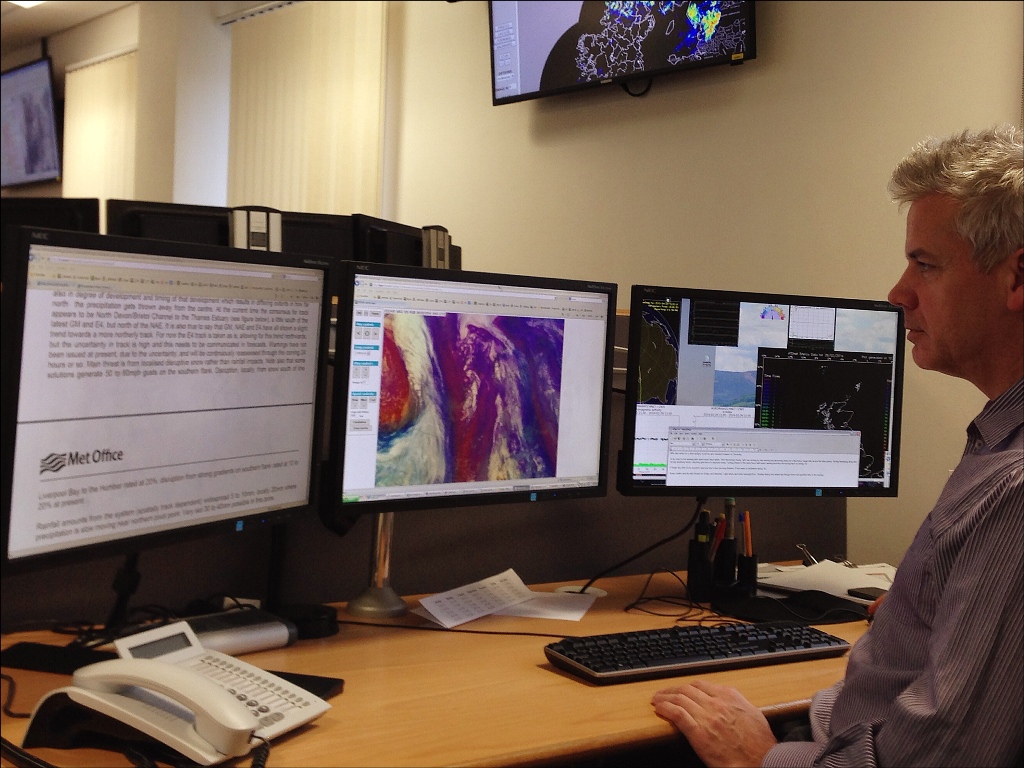
Peter Sloss, one of the Met Office forecasters involved in the flood forecasting service, provides in inside view of the developing hydrometeorological service capabilities.

“Weather forecasting and more specifically rainfall forecasting was so much simpler way back then, even going back a relatively short period of 5 to 10 years. We were using a single deterministic weather model, the Met Office Global Model (GM) which then provided boundary conditions for a higher resolution limited area model or LAM. We must bear in mind that today’s GM has a higher horizontal resolution (~25km) than the first version of the LAM. There was a significant human contribution to the final output especially as orography (hills and mountains) was never modelled precisely due to the relatively large grid spacing. We also had sight of numerical models from other centres but these were not necessarily optimised for UK forecasting. I remember one forecaster who swore by a third party model (no name to protect the innocent!) but I did feel that we were ‘clutching at straws’ by referring to it!

One of the operational meteorologists providing support for the daily production of the flood guidance statement in Scotland.

One of the operational meteorologists providing support for the daily production of the flood guidance statement in Scotland.

When it came to producing the rainfall forecasts for SEPA in previous years, we had the data from one model which we ‘adjusted’ following guidance on the evolution with the Chief Forecaster at Bracknell (now Exeter). We would type in any extra relevant information and then issue. Rainfall warnings were also relatively simple. We had a threshold value of rainfall in a 24 hour period. If we thought that would be met, we would issue a rainfall warning and that was it. We would then sit back ‘with our feet up’ waiting for the heavy rain to begin! In the meantime, the confidence level for the event would increase or decrease with the arrival of every satellite picture, radar image and later model runs. There was seldom an opportunity or formal mechanism to discuss this with anyone unless the warning was so wrong that it required to be cancelled. We were, to a certain extent, working in isolation. Without an operational requirement to talk to anyone…. we had ‘peace and quiet’!

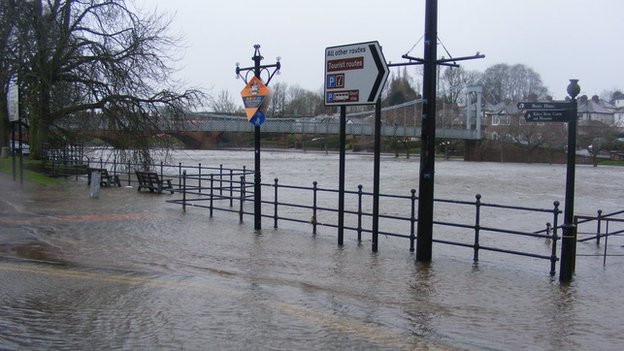
Flooding on the Nith in Dumfries during December.  Environment Minister, Paul Wheelhouse: "I was extremely impressed by how well prepared all the authorities were - aided by the timely and accurate flood forecasts from the Scottish Flood Forecasting Service (Source: BBC).

Flooding on the Nith in Dumfries during December. Environment Minister, Paul Wheelhouse: “I was extremely impressed by how well prepared all the authorities were – aided by the timely and accurate flood forecasts from the Scottish Flood Forecasting Service (Source: BBC).

Since the implementation of the Scottish Flood Forecasting Service in the Spring of 2011, things have got busier and more focused. For a start, we spend more time on the telephone communicating the weather situation with our hydrologist partners instead of keeping it a ‘secret’ as we did before. We also spend a lot of time analysing various weather models both deterministic and probabilistic. We still look at models from other centres but now have a better idea of their relative performance and characteristics. With a choice of models and the increased use of ensembles, most significant weather events present the meteorologist with a range of options.  Our job now is using our experience, not only to add value to model outputs, but also having the courage to discount solutions which we think are unlikely. This is done on a regular basis with always the concern in the back of your mind that an outlying solution might just be right. You know that after every extreme weather event, one of the model solutions may have provided good guidance.  We can however exploit the benefit of hindsight to improve the quality of our decisions, should a similar situation come along again.”

So what has changed?

“Before; yes simpler but lacking the joined up working and improved decision making that comes with a formalised operational partnership. We would issue warnings but have no way of communicating the evolution of the weather event and changes in confidence. We probably got it ‘wrong’ more often and did not always make the best decision with the information we had.

Peter Sloss in a meteorological forecaster at the Met Office and has over 30 years experience of the provision of forecasting services including BBC Scotland.  Peter has been one of the core flood forecasting service team from the start in 2011.

Peter Sloss is a meteorological forecaster at the Met Office and has over 30 years experience in the provision of forecasting services including BBC Scotland. Based in the Operations Centre in Aberdeen, Peter has been one of the core flood forecasting service team from the start in 2011.

After; a huge improvement with few surprises during the evolution of a weather event. Always fine tuning the details of the weather forecast up to and during the event and communicating this message to all concerned.  Also, as a forecasting service partner, the meteorologist is much more focussed on the impacts of the rainfall rather than just the amount of rain expected. Yes the models are getting better and the increased use of high resolution probabilistic forecasts are helping to quantify uncertainty but the impact based discussions between the meteorologist and the hydrologist remain a crucial and effective part of the flood risk guidance and, ultimately, the decision making process with responders in Scotland.” 

Posted in Forecasting, Hydrometeorology, Weather prediction | 1 Comment

Mountain Hydrometeorology

Mountain weather can be highly variable in space and time and is often extreme, with implications for recreation, agriculture, industry, infrastructure and ecosystems. A national meeting of the Royal Meteorological Society is being held on Saturday 28 June and Sunday 29 June 2014 with speakers at this session covering challenges and progress in hydrometeorological research, forecasting and the use of forecasts in mountain environments.  Of relevance to the flood forecasting service there will be presentations on hydrometeorological monitoring and forecasting in the upland environment and a visit to the forecasting centre operations in Perth.

This national meeting of the Royal Met. Society is being held jointly with the Scottish Local Centre at the A K Bell library in Perth

This national meeting of the Royal Met. Society is being held jointly with the Scottish Local Centre at the A K Bell library in Perth

This meeting is part of the Royal Meteorological Society Meetings programme, open to all, from expert to enthusiast, for topical discussions on the latest advances in weather and climate and also includes a visit to the Strathallan weather station.

Posted in Conference, Hydrometeorology | Leave a comment

Coupling meteorological and hydrological forecasting models: the Canadian case

In June 2013 the city of Calgary and state of Alberta witnessed devastating flooding with four fatalities and over 100,000 people evacuated from their homes. It’s difficult to comprehend flooding on this scale in Scotland but comparing this to the Strathclyde floods of 1994 still doesn’t come close. The floods cut off the main transport links across the state, wrecked communities and displaced many thousands of people, many of who have still not returned to their homes some eight months on.

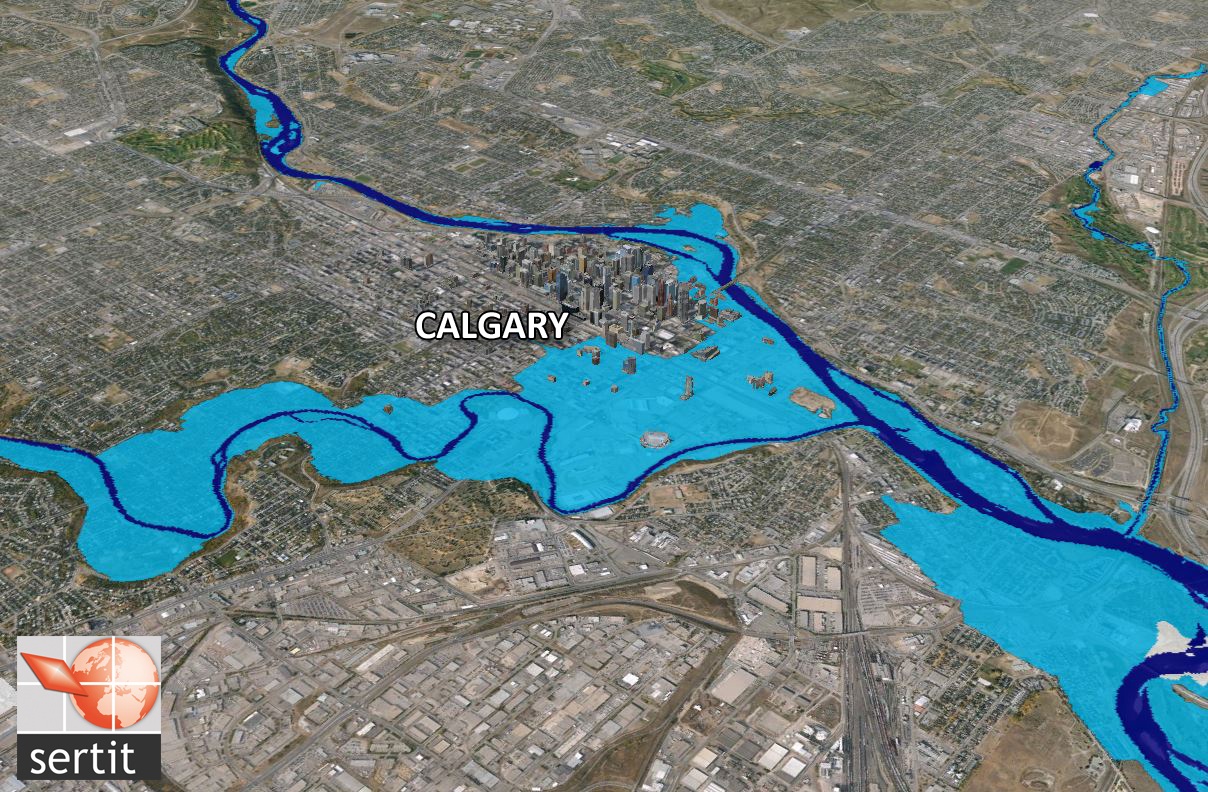
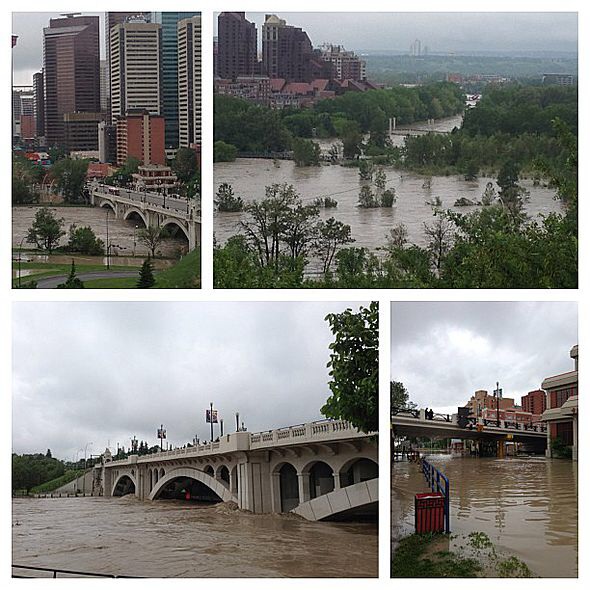
In Calgary, the rivers flooded neighbourhoods, including the downtown, leading to large economic and insured losses. SERTIT provided rapid snapshot of the flood footprint over the area of Calgary using satellite images for the insurance industries.

In Calgary, the rivers flooded neighbourhoods, including the downtown, leading to large economic and insured losses. The image here is provided by SERTIT who provided rapid snapshot of the flood footprint over the area of Calgary using satellite images for the insurance industries.

Forecasters have come in for some tough criticism following the largest disaster in Canadian history.  A benchmarking review by Alberta Water Smart and a workshop supported by Alberta Innovates has looked at the flood and other international approaches to flood forecasting to highlight any opportunities for the state. At the workshop held in Calgary, the Head of the Alberta River Forecasting Centre presented their hydrological forecasting tools that model discharge accounting for snowmelt, observed and forecast rainfall. However with unprecedented rainfall of 10 to 20 mm per hour for 14 hours and many streamflow gauges being washed out, it’s understandable that forecasting capabilities were challenged. Warnings were issued but it’s clear the scale of the event very quickly escalated.  One of the points raised by the forecast centre head was that ‘they want to be better equipped to communicate to meteorologists’ no doubt around the uncertainty in meteorological predictions.

Environment Canada (the federal meteorological bureau) operate various numerical weather prediction models. Looking back at the June floods, their North American Ensemble Forecasting System was indicating a hot spot of rainfall in the key area up to 14 days ahead and their tool the Extreme Forecast Index (EFI) suggested a 60 to 80 percent of extreme rainfall at a 7 to 10 day lead time.

Flooding affecting parts of the City of Calgary, Alberta (Source: Accuweather.com)

Flooding affecting parts of the City of Calgary, Alberta (Source: Accuweather.com)

Some of the key opportunities for improved flood forecasting highlighted at the workshop included longer lead times for warnings (a look to the five day flood guidance statement perhaps), setting a clear mandate for flash flood forecasting, and cutting the political layers for disseminating warnings direct from the forecast centres to members of the public (Floodline being considered a good example). One of the greatest areas of development could be in the closer integration of meteorological and hydrological forecasting – one of the key recommendations from the UK Pitt Review following the 2007 floods.

Following the workshop reports have been published expressing willingness to develop such medium range hydrometeorological capabilities with the Environment Canada stating “It’s pretty clear that if Environment Canada had had an operational river flow system coupled to our ensemble prediction system, probably because we have faster and bigger computers than the province has, potentially we could have provided (the warnings) faster.”

Accumulated precipitation contours showing the June 19–22, 2013 rainfall event within Alberta's Rockies and the foothills that triggered the flooding (Source: Wikipedia)

Accumulated precipitation contours showing the June 19–22, 2013 rainfall event within Alberta’s Rockies and the foothills that triggered the flooding (Source: Wikipedia)

However, the greatest benefit would be deploying this system approach on a regional stage, as a lead scientist from ECMWF states, “Local conditions are likely not to be perfectly captured in a global system, results could definitely improve if a similar model was set up on a limited area.” All of this seems additionally challenging with a complex federal and provincial arrangement.

Political will and drive for developing the flood forecasting capabilities seems crucial especially when water management priorities are focused heavily on drought and water availability. However, the capabilities are there with the respective forecasting centres and research groups; hopefully this flood will provide the catalyst for coupling their capabilities.

Posted in Flood, Forecasting, Hydrometeorology, Weather prediction | 1 Comment

Meteorological forecast data: define what’s best!

Following earlier posts on the Heavy Rainfall Alert tool, Peter Buchanan our Met Office forecasting service co-ordinator explains ‘what is best data!’

“The Met Office has had an operational numerical modelling capability for many years now. It runs a plethora of leading edge atmospheric, wave, ocean and specialised (e.g. air quality) models round the clock, for 365 days a year. This vast pool of data, as well as being used by the Met Office’s in-house experts, forecasters and consultants, is increasingly being made available to customers and end users.

The flood forecasting service has been working hard, mainly during the summer of 2013, to pull through the latest science and technical developments into the flood forecasting tools run by SEPA, in particular, the Grid-to-Grid (G2G) distributed hydrological model and coastal forecasting tools.

The various weather models are run at different times, at different resolutions, for different forecast periods and over different domains. So how do we choose the best model or models to use for a particular task and when is the best time to access these data? The Met Office has introduced the concept of ‘best data’ to simplify and optimise the application of these data for downstream users like the flood forecasting service.

Depending on the end user application, ‘best data’ can come in two ‘flavours’, best gridded data and best site specific data. For the most part, we use best gridded data for the purpose of flood forecasting. In essence, the best data process will combine the very latest and most appropriate data from a variety of models to produce a seamless data set from now to several days ahead. These raw data are integrated and further optimised by the Met Office’s Post Processing system which can add further value (e.g. further diagnostics and downscaling) and present it in a fixed high resolution grid. This Post Processing step helps future proof the data for end user systems as upstream configuration changes and science improvements will remain transparent, from the purely technical point of view.

Best data

The components and model make up of ‘Best Gridded Data’ (Copyright Met Office)

SEPA and Met Office systems and colleagues use these best data operationally to provide ‘best guidance’ in support of the flood forecasting service.

We can expect these ‘best data’ to help further improve forecasting service performance in the months and years ahead, particularly with the integration of high resolution probabilistic forecasts and the continuing development and refinement of the underpinning hydrological and meteorological models.”

Reference

Moseley, S. (2011), From Observations to Forecasts – Part 12: Getting the most out of model data. Weather, 66: 272-276. doi: 10.1002/wea.844.

Posted in Forecasting, Probabilistic, Weather prediction | 1 Comment

Forecasts for the December 2013 Dumfriesshire Floods

Dumfries

Flooding of the Whitesands area of Dumfries affecting several homes and businesses (Source: BBC)

Recovery activities are under way following the floods that badly affected parts of Dumfries and Galloway on Monday 29th December. Seven were rescued from their farmhouse after the River Nith flooded large parts of Nithsdale and Dumfries.  Flooding started in the early hours of Monday affecting 40 properties in Kirkconnel followed by flooding of the Whitesands area of Dumfries.

Mogreps

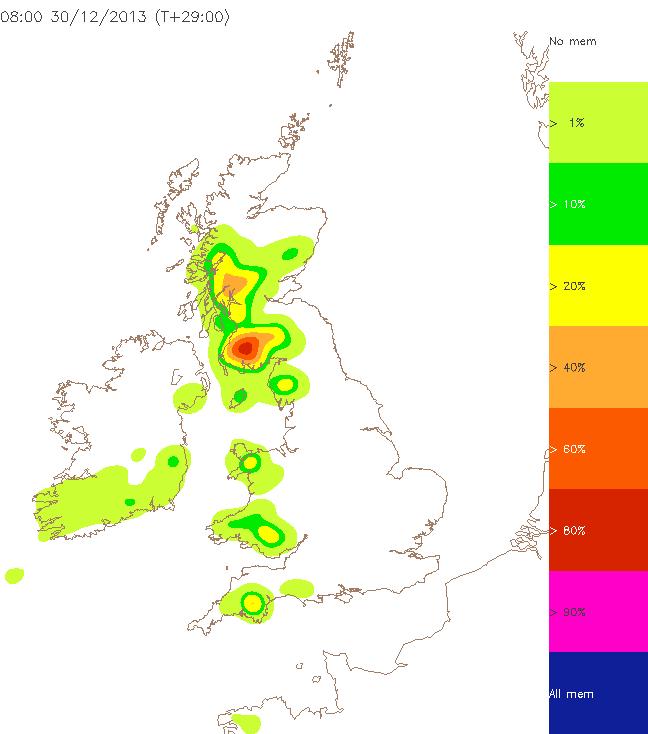
MOGREPS-UK weather prediction model from Sunday 29th December highlighting a 80% probability of greater than 40 mm in 12 hours for the hills of Galloway at a 29 hour lead time. (Copyright Met Office)

Scotland’s Environment Minister praised the efforts of responders in their attempts to mitigate the impacts of the flooding from rivers following the various alerts and warnings that were issued.  Indications on Saturday and early on Sunday was for a low likelihood of some significant flooding impacts for parts of south west Scotland.  Confidence grew during Sunday for the greater potential in flooding severity with meteorological and hydrological models all providing a strong signal for flooding impacts across Ayrshire, Peebleshire and in particular Dumfries and Galloway.  Output from the MOGREPS-UK model highlighted an area of 40 to 50 mm in 12 hours with some models suggesting isolated totals over 70 mm. This resulted in an Amber national severe weather warning being issued supported by the Flood Guidance Statement.

Rainfall data across the 24 hours has highlighted spot totals of over 50 mm with some isolated SEPA gauges having recorded over 70 mm and one river gauge on the Nith having recorded its highest level on record.  Unfortunately with further low pressure systems expected it looks like 2014 may start with continued heightened concerns about the risk of flooding.

Posted in Uncategorized | 2 Comments